
By Dr. Githinji Gitahi
On this Africa’s Women’s Day, I find myself both encouraged and restless.
Encouraged, because in May this year, Kenya launched the Every Woman Every Newborn Everywhere (EWENE) Acceleration Plan, alongside a Rapid Results Initiative (RRI), committing resources and accountability structures. Through these initiatives, the Government committed KES 17 billion to reduce preventable maternal and newborn deaths and accelerate access to life-saving interventions including oxytocin and heat-stable carbetocin to safeguard maternal health, and CPAP machines and antenatal corticosteroids to improve newborn survival. To date, more than KES 9 billion has been disbursed directly to county facilities. At a time when an estimated 1.4 million Kenyans are pushed into poverty each year owing to astronomically high out-of-pocket healthcare expenses, the political will to address our gravest challenges is progress that Kenya can be proud of.
Yet I also feel restless, because 15 mothers and 92 newborns still die in Kenya every day from causes such as postpartum haemorrhage (PPH) and newborn infections leading to neonatal sepsis, despite us knowing how to prevent it. The life-saving innovations that exist are not consistently available at the last mile. And for all its ambition, the new financing architecture, the Social Health Authority (SHA), has introduced barriers that are preventing women and children from accessing care.
While SHA has, since its launch in late 2024, enrolled over 31 million Kenyans and financed more than 1.16 million safe deliveries, serious gaps remain. For example, while allocations to the Primary Healthcare Fund increased from KES 7.1 billion to 13.1 billion between 2024 and 2026, this is still only 30% of what is needed to deliver the promised services. As a result, millions of Kenyans are forced to pay for health services that were once free of charge.
Beyond funding, the operational rollout of the SHA is encountering early challenges that were to be expected with a major health financing reform. A ThinkWell assessment found that SHA portal downtimes, client authentication issues, and onboarding challenges created difficulties for facilities registering patients or submitting claims. These teething issues are solvable through enhanced onboarding, improvements to the digital infrastructure, and public reporting of portal status for accountability, among other.
However, Kenya is not on track to meet its SDG targets for maternal or newborn mortality by 2030. And for this, the SHA must guarantee free maternal care for every woman, regardless of registration status or premium payment, that fully covers essential maternal health services, including for associated complications like post-partum haemorrhage, sepsis, pre-eclampsia, and respiratory distress, at all public health facility levels. The SHI Act’s provision to identify and cover vulnerable households is a promising measure that must be implemented without further delay, with a dedicated indigent fund established. The Primary Healthcare Fund must also be adequately capitalised to fulfil the remaining 70% of its budget.
Change is difficult, but disruptive change is unavoidable when we build something better. Through these times, the government must continue to work hand in hand with civil society and non-state actors, whose presence on the ground in communities, can help translate political declarations into inclusive implementation.
We must equip Kenyans to navigate this new system by raising awareness around what services are available to them and how they can access them. In this regard, Community Health Promoters (CHPs) will be key to getting the message out through community education and counselling. They are a critical last-mile delivery mechanism, reaching the most vulnerable individuals who otherwise slip through the cracks. The government’s decision to roll out comprehensive insurance cover for Kenya’s 107,000 CHPs starting this month is a very welcome measure. It sends a signal to CHPs that they are valued, and their efforts are integral to building a stronger health system.
As Kenya navigates this transformative change, I am restless yet hopeful. Its learnings can serve as a model for other countries enacting reforms to make Universal Health Coverage a reality. The successes and friction points of this transition aren’t true only for Kenya, but for many other African countries grappling with the same questions of how to design, fund, and operate a health system where anyone can access healthcare without being pushed into poverty. We must now just match our good intentions and deliver on this model quickly.
Why This Matters
Kenya knows how to deliver on maternal and newborn health, and has the tools to do so. We now need collective action that will ensure that every pregnant woman who walks into a health facility walks out alive, healthy, with an equally healthy newborn safely in her arms.
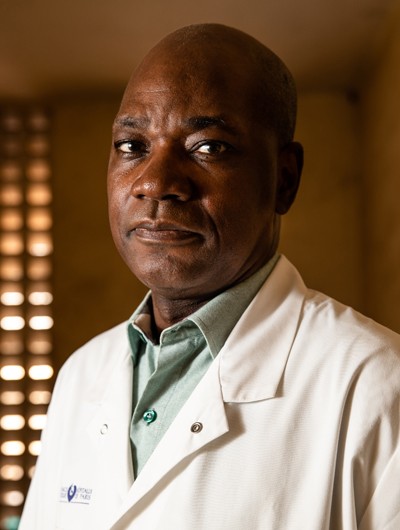
Dr. Githinji Gitahi is the Group CEO, Amref Health Africa
Subscribe to Africa Health Watch
Get the latest health policy analysis and investigative journalism delivered straight to your inbox.
We respect your privacy. Unsubscribe at any time.