
A tuberculosis vaccine trial running simultaneously in South Africa, Kenya, Uganda and Zambia must clear four separate regulatory systems, four sets of ethics requirements and four data-transfer agreements before a single participant is enrolled. Each country reviewing the same protocol on its own timeline, under its own rules.
“That is already a lot,” says Professor Nothando Ngwenya, Head of Social Science and Research Ethics at the Africa Health Research Institute (AHRI) in KwaZulu-Natal, South Africa. The long process also slows down research progress, Ngwenya noted.
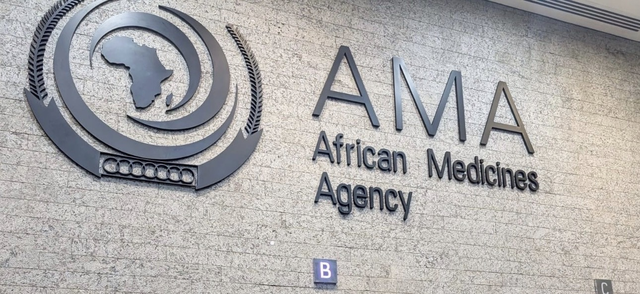
It is this kind of duplication, across the continent’s 54 countries, that has kept Africa on the margins of global clinical research and genomic science, despite carrying a disproportionate share of the world’s disease burden and holding the world’s greatest human genetic diversity. As African Union health ministers prepare to meet in Addis Ababa this month for the 76th WHO AFRO Regional Committee session, Ngwenya and a group of fellow researchers are pressing for a specific ask: full ratification and sustainable financing of the African Medicines Agency (AMA), the continental regulator established by treaty in 2019 but still operating without the full legitimacy or resources to function at scale.
Ngwenya is one of five Africa Voices for Science (AVoS) champions, including a sitting governor-minister and public health and economic policy specialists, who co-authored the brief informing this advocacy push
The Case for a Continental Regulator
For Ngwenya, whose work spans bioethics and data sovereignty, the case for AMA isn’t bureaucratic. “We’re not really pushing for regulation just for regulation’s sake,” she says. What an effective regulatory system should enable, she argues, is African-led, multi-country research conducted under governance that African institutions shape.
That framing matters when it comes to data. African populations contribute less than two percent of the world’s genomic data, even though they carry more genetic diversity than all other populations combined. Ngwenya breaks down what that gap costs the continent. There is a health cost: precision medicine tools, genetic risk scores and pharmacogenomic diagnostics built largely from non-African datasets perform less accurately in African patients. There is a scientific cost, as new disease mechanisms and drug targets emerge from data that leaves African researchers out.
Data sovereignty does not mean walling African data off from international collaboration. “Science depends on collaboration and responsible data sharing,” she says. It means African researchers, institutions and communities having a genuine say in how their data is generated, accessed, shared and used, rather than remaining, she noted, “the poorer cousin” in a genomics revolution already happening.
Kenya’s experience last December illustrates the risk of leaving that governance to individual countries. Its High Court suspended parts of a bilateral health data-sharing agreement with the United States after petitioners argued it allowed broad foreign access to sensitive health and genomic data without adequate safeguards. For Ngwenya, the episode shows what happens when countries negotiate alone, weaker bargaining power, and a risk that African states end up competing against each other rather than setting shared terms. A fully resourced AMA, working alongside the Africa CDC’s data governance framework, could give the continent what individual negotiations cannot, collective bargaining power, and a single body with the technical capacity to move regulatory harmonisation from aspiration to implementation.
What Ministers Should Commit To
The near-term ask for the 76th WHO AFRO Regional Committee session in Addis Ababa is specific. Countries that have not ratified the AMA Treaty should commit to a public timeline. Countries that have ratified should set out clear steps toward implementation. “A lot of the time we keep talking,” Ngwenya says. “Now it’s about we need this to move forward.“
Africa does not have to build this from nothing. Regional precedents already exist. ZAZIBONA, a joint medicines review initiative launched in 2013 by Zambia, Zimbabwe, Botswana and Namibia, now includes South Africa, Malawi, Mozambique and Tanzania, sharing dossier assessments and manufacturing inspections across borders. The East African Community’s (EACs) Medicines Regulatory Harmonisation programme, running since 2012, has similarly pushed member states toward common technical standards. Both, Ngwenya notes, demonstrate that pooling regulatory expertise does not require any country to surrender its own regulatory authority, an assurance she believes some governments still need to hear.
The European Medicines Agency is also evidence that continental coordination and national sovereignty are not in tension. “It’s a network that works,” she says, one where national regulators retain their authority while gaining access to shared continental expertise.
What Success Looks Like
Success would look modest but concrete, an African researcher leading a multi-country trial without unnecessary duplication, national regulators strengthened by their connection to continental expertise, and data shared responsibly across borders. Failure would look like more of the present, a continent that keeps participating in global science without the power to shape it.
“We’re not starting from scratch,” Ngwenya says. The question, as ministers gather in Addis Ababa, is whether they are ready to finish what has already begun.
Why This Matters
Africa’s health ministers meet in Addis Ababa from 24 to 28 August for the 76th session of the WHO Regional Committee for Africa, one of the continent’s most consequential health policy gatherings of the year. The African Medicines Agency Treaty has been in force since 2021, and the Agency has since appointed Dr Delese Mimi Darko as its inaugural Director General and set up headquarters in Kigali. However, 22 African Union member states have yet to ratify it, and financing remains incomplete, leaving the continent’s only continental medicines regulator without the legitimacy or resources to function at scale.
A meaningful outcome from this meeting would be for the ministers of those 22 countries to commit to full ratification, alongside a public timeline for doing so. For countries that have already ratified, it would mean setting out clear steps toward implementation and funding, rather than treating ratification as the finish line. Without both, Africa will keep running clinical trials and generating genomic data under systems built for a fragmented continent, one where a single multi-country study still means navigating as many regulatory processes as there are countries involved.
Subscribe to Africa Health Watch
Get the latest health policy analysis and investigative journalism delivered straight to your inbox.
We respect your privacy. Unsubscribe at any time.