
Across Africa, health systems are having to do more with less. Countries are facing persistent health needs with fewer resources to meet them. The abrupt withdrawal of USAID funding in 2025 disrupted health systems across the continent. It also revealed how heavily many programmes relied on external funding support, which was often unpredictable.
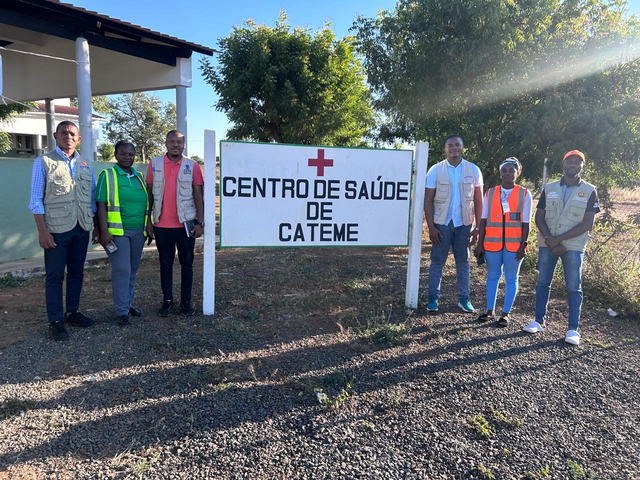
The health worker’s vehicle is barely out of sight when the questions start. “Why didn’t they check my son’s growth this time? Where is the net for the baby?” A mother in Tete, Mozambique, has just watched the immunisation team leave. They delivered the vaccines, ticked the box, and did nothing else. The nutrition team isn’t due for another two weeks. Nobody knows when the malaria team is coming. For her, this is not a single missed appointment. It affects her whole month. The same problem happens to many mothers in the village and across many villages in the district. Mauro Cuna, who leads Acasus’s work in Mozambique, calls it “community fatigue.”
“It gets to a point where you get tired,” he said, “because you need to move from point A to point B every day, but you have other social things to also take care of.”
When the abrupt withdrawal of USAID funding hit in 2025, it exposed the weakness of an already fragmented health system. Immunisation, nutrition and malaria ran as fragmented, uncoordinated programmes. One organisation working with governments on this challenge is Acasus. Acasus is an international development consultancy. It works with governments to strengthen service delivery, improve the use of data, and make better use of limited resources.
In an interview with Africa Health Watch, Cuna explained how health leaders in Tete, a Province in Mozambique, found that the funding gap was not the real problem. The real problem was a lack of coordination.
“The main issue wasn’t just the lack of money; it was that we weren’t working together,” Cuna said. Multiple partners financed immunisation, nutrition, malaria and family planning separately. They often sent health workers to the same villages on different days.
Tete’s fix was not a new tool or more money. It was coordination: one shared visit schedule instead of four, different programmes pooling vehicles instead of hiring their own, a common data system instead of parallel ones, and a single coordination forum instead of scattered partner meetings. The savings freed up funds for vaccinator allowances and community mobilisation instead.
That provincial experiment is now shaping national policy and Mozambique’s Ministry of Health has recommended integration across all provinces, folding it into the country’s 2026–2030 health strategy and its agreement with the United States.
Nigeria arrived at the same lesson through a different direction: data.
In Sokoto and Kano, Acasus helped the government see exactly where facilities lacked medicines, equipment or regular immunisation sessions.
In Kano, data revealed that many facilities were running one or two immunisation sessions a week, instead of the five they could run. This was according to Folake Oni, Acasus’s Project Director for Nigeria. Speaking with Africa Health Watch, she said Kano began addressing the gap after the state directed service-ready facilities to provide daily sessions. Compliance rose from a slow start to 81 percent by June, and the number of children reached through routine immunisation nearly doubled.
In Sokoto, Acasus helped the state government pool funding from the World Bank, the Basic Health Care Provision Fund and other sources. They used one shared set of data to find the gaps. Within six months, deliveries at remote clinics rose from 22% to 82%. Medicine stockouts fell from 43% to 22%. The number of women using modern family planning methods climbed from 42,296to over 50,000.
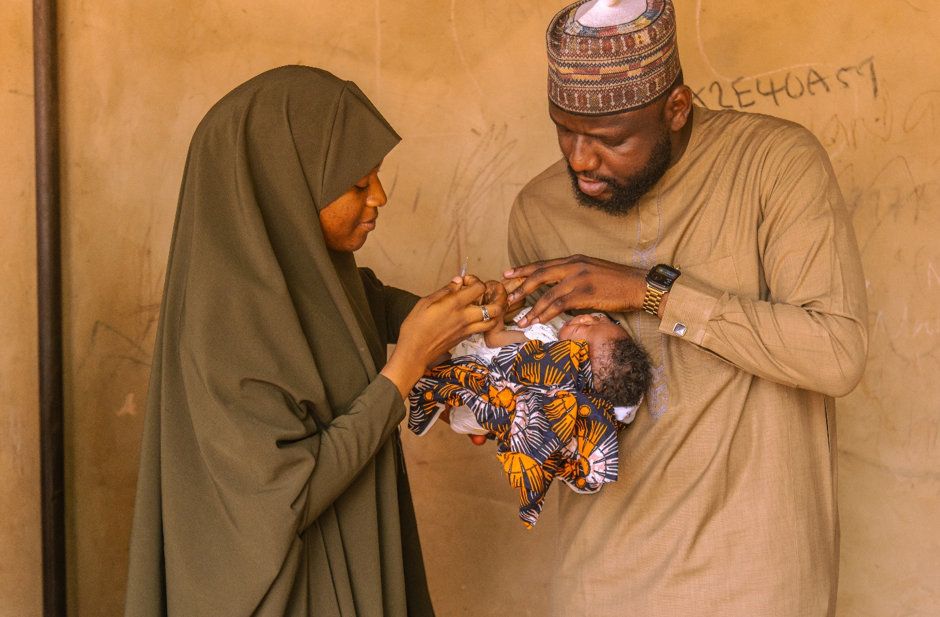
Moving Beyond Individual Programmes
Integration becomes particularly important as countries reconsider how disease-specific programmes fit within primary healthcare. When malaria, immunisation, nutrition and other services operate through separate structures, they compete for the same health workers, facilities, and other limited resources.
The World Health Organization’s cross-programmatic efficiency analysis has shown that duplication, overlapping systems and inefficient use of resources can arise when programmes operate separately. The long-term goal, according to the Acasus team, is to move beyond standalone programmes and integrate services such as malaria into primary health care (PHC) systems.
“It is not so much just about the funding being cut, It is the lesson we’re learning that a government-owned, data-driven system can absorb shocks without collapsing.”
~ Folake Oni
When asked to imagine what malaria control could look like in future, Oni pointed to a shift from siloed disease-specific donor-funded projects to a single government-owned architecture. But this shift would need a strong and efficient PHC system, with governments taking ownership and accountability, while making malaria outcomes part of broader primary healthcare priorities.
Why This Matters
Mozambique’s experience shows what integration looks like in practice. Instead of treating malaria, immunisation and nutrition as separate activities, the country is testing how to combine some of these services. For a caregiver, that could mean getting several services during one visit instead of having to return on different days.
Integration must become a lasting part of the health system. To do this, governments need to take ownership of the process. They must define their priorities, align resources around them, and use data to track whether they meet those priorities. External partners, in this model, do not replace for government leadership. Instead, they help governments identify the gaps, understand what resources are available, and act on that information.
The experience in Mozambique shows the value of starting small. It shows the value of learning from what works and then scaling up successful approaches. Countries do not need to assume an integrated model will work everywhere in the same way. They can test what works in their own settings and adapt it as they go.
Subscribe to Africa Health Watch
Get the latest health policy analysis and investigative journalism delivered straight to your inbox.
We respect your privacy. Unsubscribe at any time.