
In 2014, as Ebola spread across West Africa, Dr. Ibrahima Socé Fall’s served as the World Health Organization (WHO) Representative in Mali, working alongside national authorities and other partners as the country responded to the outbreak, which was limited to eight cases. A decade later, at Institut Pasteur de Dakar (IPD), he is helping strengthen Africa’s capacity to develop vaccines locally, reducing reliance on external institutions during health emergencies.
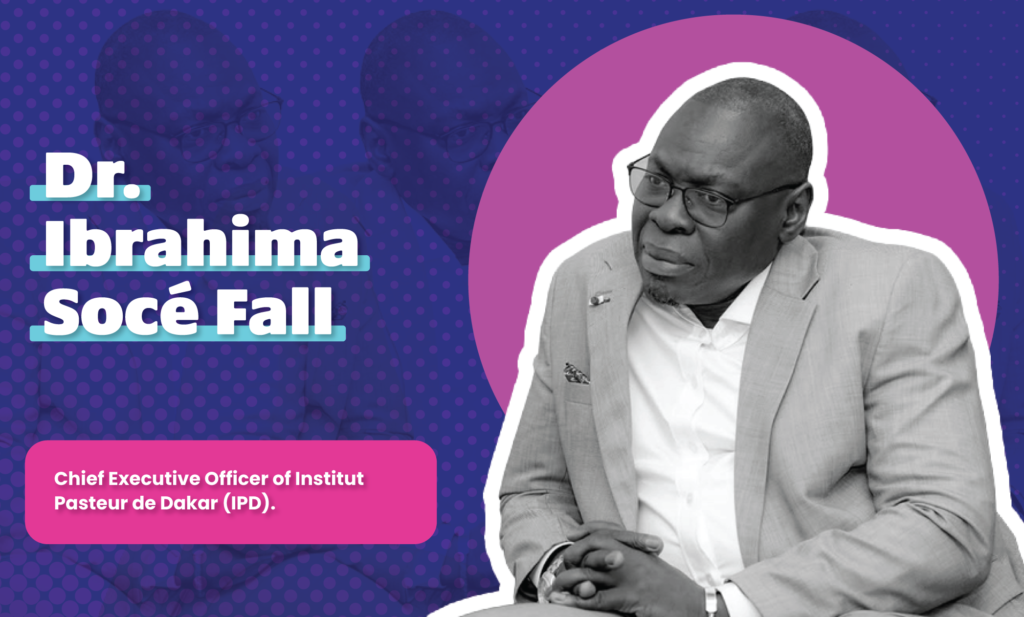
Ebola disease is a severe illness that can be fatal, particularly without timely diagnosis. The disease has an average case fatality rate of around 50%, although outcomes can vary depending on the outbreak. The 2014–2016 Ebola outbreak in West Africa was one of largest recorded outbreak of the disease and became a public health emergency of international concern (PHEIC). During this period, Dr. Ibrahima Socé Fall, an epidemiologist and current Chief Executive Officer of Institut Pasteur de Dakar (IPD), served as the WHO Representative in Mali and worked with national authorities as part of the country’s Ebola response.
In an interview with Africa Health Watch, he shares his journey, his current role, and what African countries must do to build stronger, more resilient health systems. This interview has been edited for brevity.
You have built a respected career in epidemiology and global health. What first drew you to this field, and what has kept you in it?
Dr. Fall: I wanted to be a surgeon and not a public health specialist. I spent 8 years training as a medical student at a military health academy, but upon graduation, the Army leadership explained that the country already had enough surgeons, and the greater need was in public health. I was sent to the Institute of Tropical Medicine of the Armed Forces Health Service (IMTSSA), commonly known as École du Pharo, where I studied epidemiology and tropical medicine. Returning to Senegal, I was posted to a remote area to serve as a district health manager, while also leading the regional epidemic preparedness, surveillance, and response system, overseeing all kinds of public health issues. That was when I realised the scale of the public health challenge facing my country, and this conviction shaped the rest of my career.
Your leadership of Mali’s Ebola response in 2014 led to the successful containment of the crisis; what was the scale of the outbreak at the time, what approaches did you take to stop the transmission, and what was the result?
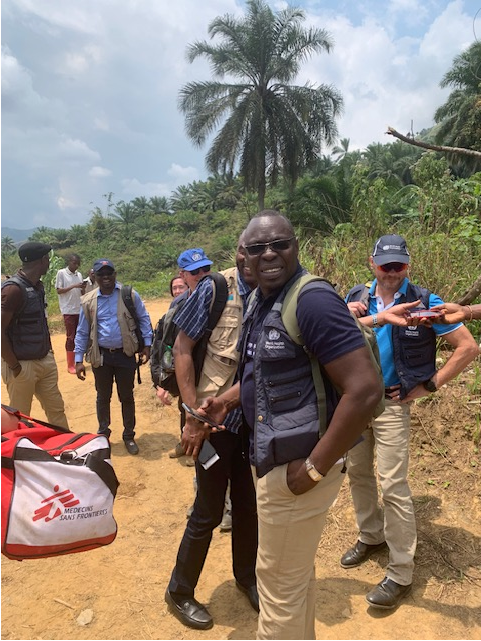
Dr. Fall: As a World Health Organization representative in Mali, when the outbreak started in Guinea, we knew Mali was at risk. Immediately, we started working on preparedness. I repurposed my office’s budget to secure supplies before many of the affected countries did. At a certain point, my team became tired because there had been no cases in Mali, so I introduced simulation exercises. The first simulation exercise was organised by WHO, and on the very day we finished it, we detected our first Ebola case. Just as we were about to declare that there was no outbreak, a new case emerged in the capital city. When the Ministry of Health hesitated to declare it, I stepped in and announced it live on television. The president responded immediately, mobilising the government and the community. By the end of that outbreak, we had recorded only eight cases and Mali was declared Ebola-free.
Later, during the 10th Ebola outbreak in Congo, I served as the WHO Assistant Director-General for Emergency Response, supporting containment efforts and contributing to WHO’s health emergency reforms. I also worked on Joint External Evaluations under the International Health Regulations, risk profiling for epidemics, simulation exercises, and national health security planning. Today, more than 120 countries have conducted Joint External Evaluations.
From stopping Ebola in Mali to now leading the Institut Pasteur de Dakar, what are you doing to strengthen Africa’s vaccine manufacturing capacity, and what are the impacts so far?
Dr. Fall: First, we are investing in the workforce and strengthening the end-to-end value chain. We are also investing in the infrastructure for pre-clinical research and development, translational research, and manufacturing. Building the ecosystem takes a lot of investment, but we are already working across it, ranging from basic research and clinical research to vaccine manufacturing.
In one year at Institut Pasteur de Dakar (IPD), our diagnostic development team produced the first-ever rapid test for measles, and currently we are receiving requests for technology transfer from Africa to Europe and Asia. IPD was also selected by WHO a few months ago as a regional training hub for biomanufacturing. Today, we are a WHO collaborating centre for flu and respiratory diseases. IPD is also carrying out end-to-end development of a new candidate vaccine for Marburg.
For policymakers and public health teams tackling today’s health challenges, what key lessons from your experience could help in their work?
Dr. Fall: First, we need to close the gap between researchers, policymakers, and the population. Evidence-based decision-making is critical for policymakers, which is why close collaboration with researchers is so important. Policymakers must also consider the needs and priorities of the population. Our leaders need to understand that investing in health is an investment in development, because there is no development without health and no productivity without a healthy population.
What have been the hardest challenges in this work, and where do you still want to see improvements?
Dr. Fall: One of the biggest challenges in IPD is managing rapid growth. As the institution expands, we experience challenges at the management level, including human resources, IT, procurement, and broader institutional transformation. We are already embarking on consultations and reforms to ensure that all support services match the level of ambition I have for IPD.
As global funding priorities shift, what must African countries do to sustain this kind of work?
Dr. Fall: Domestic financing is very important and needs to be increased for African countries, because it matters for health security. The private sector also needs to contribute to health financing, and national insurance systems have to protect the health of their populations. Health should be a cross-cutting priority in government plans and not seen as an expense, because investing in health will have a positive impact on the economy.
“Lasting health security starts with strong local capacity. Through investment in African research, innovation, and manufacturing, we are creating resilient health systems equipped to address today’s needs and tomorrow’s challenges.”
~Dr. Ibrahima Socé Fall
Dr. Ibrahima Socé Fall’s career has placed him at the centre of efforts to strengthen health emergency preparedness and response in Africa and globally. His journey is a timely reminder of the importance of preparedness and collective action in protecting health systems. He calls for stronger collaboration and greater investment in building Africa’s research capacity.
Subscribe to Africa Health Watch
Get the latest health policy analysis and investigative journalism delivered straight to your inbox.
We respect your privacy. Unsubscribe at any time.