
For decades, medicines have largely been developed using a one-size-fits-all approach. Advances in precision medicine are changing this by enabling more personalised healthcare. Yet African populations remain among the least represented in the genomic datasets that makes this possible. In response, three African-led organisations are working to change that.

Africa is home to the greatest human genetic diversity on earth yet remains largely underrepresented in genetic studies. The continent carries approximately 25% of the global disease burden while representing only a fraction of the genomic data used in biomedical research. This lack of representation has limited the accuracy and equity of precision medicine by contributing to gaps in biomedical knowledge, misclassification of disease variants and less effective treatment recommendations.
The impact of this reaches beyond a single patient. Every medicine that goes into the market is tested in clinical trials involving defined populations. The findings from those trials are recorded and become the evidence that guides clinical decision-making worldwide. When Africans are excluded from those trials, the evidence base that guides clinical decision-making is disproportionately derived from other populations. Recognising that responses to medicines can vary across populations due to genetic diversity, as well as social and environmental determinants of health, researchers have increasingly called for more diverse and representative clinical research to ensure evidence is relevant across settings.
This ambition took a step forward in April 2026.
At the World Health Summit Regional Meeting in Nairobi, Biolinx Africa, YTO Foundation and NextGen Molecular Lab announced a South-South collaboration supported by a US$3.5 million investment and the acquisition of a NovaSeq X Plus sequencing platform. Beginning in Kenya and Côte d’Ivoire, the collaboration aims to strengthen regional genomic sequencing capacity, enabling African scientists to generate, analyse and interpret genomic data within the continent, reducing reliance on overseas laboratories and supporting more timely research.
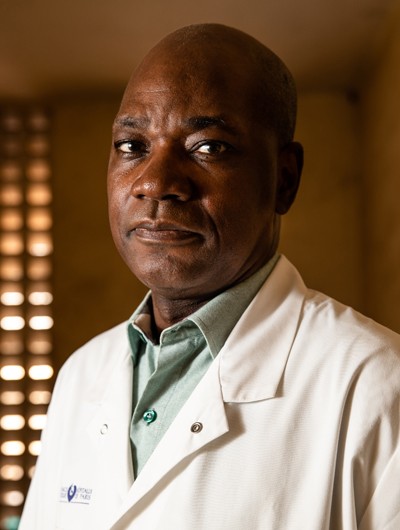
Speaking with Africa Health Watch, Dr. Robert Karanja, Founder and Executive Director of Biolinx Africa; Professor David Tea Okou, Clinical Molecular Geneticist and Founder of YTO Foundation; and Dr. George Michuki, Chief Executive Officer of NextGen Molecular Lab, explained why they believe Africa’s genomics gap has become one of the continent’s most pressing scientific challenges.
Dr. Michuki emphasised that the partnership addresses a critical gap in modern medicine.
“Current drugs are manufactured based on the reference genome of Caucasians. We do not have Africans represented in that drug design process. Having this kick off means we are introducing an African genome reference that will now go into the design of new drugs. Who benefits from that? The patients in Africa benefits, because now we have something that works for the population”
Beyond improving patient care, building genomic data could also create opportunities for local pharmaceutical manufacturing, employment and strengthen Africa’s capacity to develop its own health technologies rather than relying primarily on imported medicines.
Drawing on findings from a collaborative prostrate cancer study conducted in East Africa, Dr. Michuki and his team found that approximately 80% of the men screened carried a genetic mutation associated with resistance to apalutamide, a commonly prescribed drug for advanced prostate cancer. The findings highlighted the importance of generating evidence across diverse populations, showing that medicines developed and tested predominantly in non-African populations may not always produce the same treatment outcomes for African patients.

Moving beyond trial and error
For Professor Okou, findings such as these show the need to move beyond the trial-and-error approach that often characterises prescribing today.
He explained that when an African patient experiences side effects that are not recognised, clinicians may have little option but to prescribe an alternative medicine, relying on trial-and-error to identify an effective treatment. Precision medicine offers a different approach. By understanding an individual’s genetic profile, clinicians can identify how quickly that person metabolises certain medicines and tailor treatment accordingly.
However, generating genomic evidence alone will not improve healthcare outcomes unless it is translated into products and services that are accessible to patients. Dr. Karanja explained that Biolinx Africa is focused on converting genomic insights into practical solutions that address Africa’s health needs.
“The data that we’re talking about provides insights,” he said, “translating those insights into actual interventions means we need to create products, services and commercialise them, and with the insights that we are getting, Biolinks can harness Africa’s bioeconomy”.
Over the next year, the partnership plans to identify clinical applications, including oncology, newborn screening and pharmacogenomics, while strengthening the sequencing, bioinformatics and governance systems needed to support implementation.
Why This Matters
At the 79th World Health Assembly, World Health Organization Member States endorsed a landmark resolution on precision medicine, recognising its potential as an important pathway to advancing equitable healthcare. The resolution mandates the WHO to provide technical guidance, strengthen global collaboration, assess country readiness, and develop a global strategy to support implementation where appropriate.
The partnership between Biolinx Africa, YTO Foundation and NextGen Molecular Lab reflects this growing commitment to strengthening regional scientific capacity. Backed by a US$3.5 million locally mobilised investment, the collaboration seeks to build the sequencing infrastructure, scientific expertise and genomic evidence needed to ensure precision medicine is informed by African population and driven by African scientists. Over time, this initiative has the potential to position Africa as not just a beneficiary, but an active contributor to the evidence, technologies and innovations that shape the future of healthcare on the continent.
Subscribe to Africa Health Watch
Get the latest health policy analysis and investigative journalism delivered straight to your inbox.
We respect your privacy. Unsubscribe at any time.