
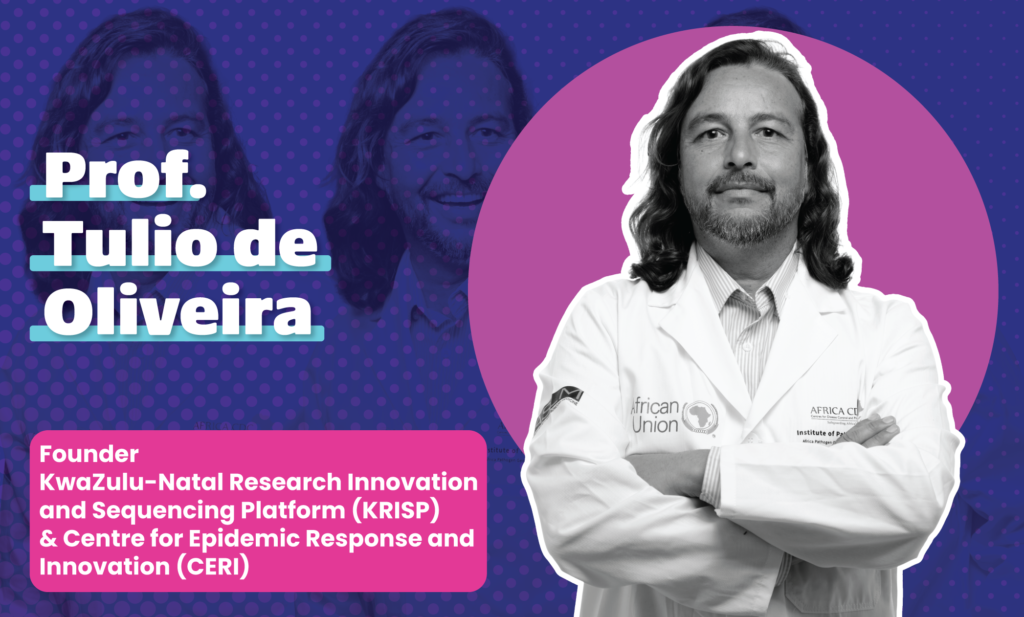
During the COVID-19 pandemic, Professor Tulio de Oliveira and his team identified the Beta and Omicron variants of SARS-CoV-2, informing early global alerts and public-health responses worldwide. He has since established the KwaZulu-Natal Research Innovation and Sequencing Platform (KRISP) and Centre for Epidemic Response and Innovation (CERI) expanding genomic expertise across the continent and training 900 scientists from 50 African countries. His team is now using genomic surveillance to help protect new tuberculosis and malaria treatments from drug resistance. Yet he warns that shifting global health funding now threatens this progress.
Genomic surveillance plays an important role in detecting and tracking changes in pathogens, including viruses and bacteria, that could cause epidemics or pandemics. By analysing the genetic characteristics of these pathogens, scientists can identify new variants, monitor the spread of infectious diseases and provide evidence to inform public-health responses.
During the COVID-19 pandemic, genomic surveillance became particularly important in tracking the evolution of SARS-CoV-2. Prof. Tulio de Oliveira, a bioinformatician who directs KRISP and CERI, was one of the scientists at the forefront of these efforts. His team’s identification and rapid reporting of these variants drew international attention to South Africa’s genomic surveillance capacity and showed what African research institutions can contribute to detecting emerging health threats.
In an interview with Africa Health Watch, Prof. de Oliveira shared his journey and provided insights into his work.
This interview has been edited for brevity.
How would you describe the state of pathogen genomic surveillance across Africa, and where do the biggest gaps remain?
Prof. de Oliveira: Genomic surveillance in Africa has made significant progress. Many African researchers, including those at CERI at Stellenbosch University, are leading work on identifying different pathogens. For example, during COVID-19, our team identified the Beta and Omicron variants. We not only identified these variants but also communicated the evidence rapidly and efficiently to the government, Africa CDC, and the World Health Organisation. Since then, we have applied the same approach to Mpox, cholera, Ebola, and other infectious diseases affecting the world today. The challenges that remain include unstable funding and shortages of trained personnel.
What change were you trying to bring to the way genomic sequencing was being carried out that led you to KRISP and CERI in South Africa?
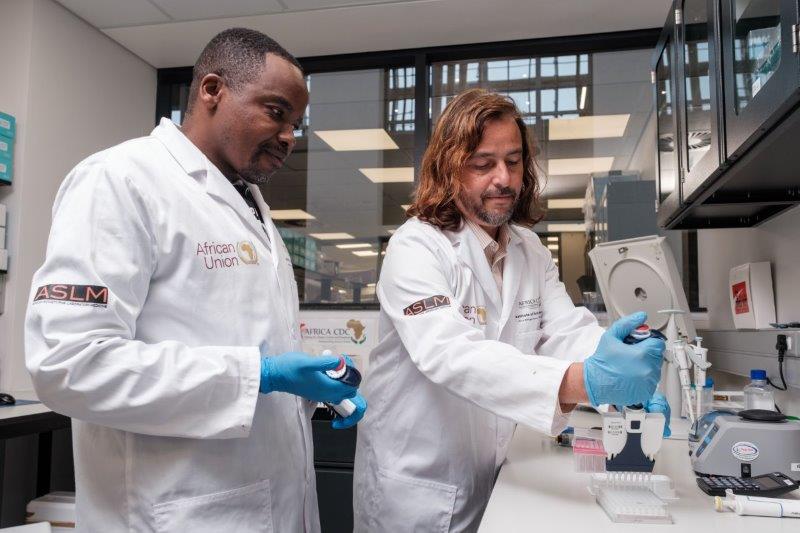
Prof. de Oliveira: The main reason I founded the two institutes was to take a completely anti-colonial approach. We wanted the institutes to be founded in South Africa and then become a magnet for all the other African countries to get advanced training. Recently, KRISP and CERI have reached an important milestone: we have trained more than 900 scientists from 50 African countries in advanced data generation and analysis. These fellows have returned to their countries and are now contributing to emerging epidemics response.
What has been the biggest impact or result of your work so far? What does the evidence of that impact look like?
Prof. de Oliveira: I have been working on genomics since 1997. Initially, my team worked on epidemics like HIV/AIDS and TB. We founded and ran a large network called the Southern African Treatment and Resistance Network (SATuRN) that advanced the use of genomics to better manage patients on antiretroviral therapy across Africa. Over the years, the evidence and results from our research have informed national and international policies. For example, UNAIDS has drawn on our phylogenetic studies to enhance HIV response around the world.
We are currently leading a genomic surveillance initiative to protect bedaquiline, the first new multidrug-resistant tuberculosis drug approved in 50 years, from drug resistance. Using the same approach, our team is working with the CUREMAL consortium to support genomic surveillance and resistance monitoring for a promising new malaria compound. This treatment has the potential to be a game changer, enabling patients to be treated more rapidly and effectively.
In addition, we are advancing policies that help Africa to produce its own diagnostics, therapeutics, and vaccines. We established a successful biotechnology incubator supporting companies that are expanding Africa’s capacity to produce vaccine and diagnostic reagents locally.
Failing to invest in African research and infectious disease control would leave the world in a far more fragile position.
~ Prof. Tulio de Oliveira
For others trying to address similar problems, whether researchers or scientists, what are the key lessons from your experience they should pay attention to?
Prof. de Oliveira: Over the years, I have learnt that scientists should not see their role as fighting policymakers or governments, but as working hand in hand with them to see how the result can be implemented most efficiently. One should learn how to communicate evidence in a way that governments can listen and act on it in good faith.
What have been the hardest challenges or limitations to your work?
Prof. de Oliveira: For the two research institutes I direct, funding remains one of the biggest challenges. A lot of capacity was built in Africa during the pandemic; for example, as part of a programme, multiple DNA sequencers were put into both academic and public health institutes in Africa. However, global health funding has become a major challenge. Unfortunately, many facilities that received large investments in the past are becoming less efficient and less functional. Sustaining them is difficult, as many struggle to maintain the reagents, equipment, and skilled personnel needed to remain fully functional. Continuous investment is therefore essential.
With external funding priorities shifting, what must African countries do to sustain the kind of work that you and others are doing?
Prof. de Oliveira: Presently, it is an extremely challenging environment for the broader scientific community in Africa. African governments must invest more in their own health systems, research capacity, and public-health infrastructure.
Prof. de Oliveira’s story is a reminder that Africa is not only responding to global health crises but also helping to detect, understand, and prevent them. By building genomic-surveillance capacity in South Africa and extending training and partnerships across the continent, he is helping to create a model for African-led science with global reach. For him, sustaining that progress will require continued investment in African institutions, talent, and infrastructure.
Subscribe to Africa Health Watch
Get the latest health policy analysis and investigative journalism delivered straight to your inbox.
We respect your privacy. Unsubscribe at any time.