
At the World Health Summit 2026 in Berlin, a keynote session launching the findings of the Lancet Commission on 21st Century Global Threats to Health examined 17 threats that could cause serious losses in human health by the end of the century, from nuclear conflict and the malicious use of artificial intelligence to climate change, antimicrobial resistance and obesity.
Assessing how these threats could affect health between 2025 and 2100, the commission found that policy decisions, investment and innovation could significantly reduce the projected losses. The findings suggest that governments and multilateral institutions need to look beyond immediate health crises and pay closer attention to the threats that could shape health in the decades ahead.
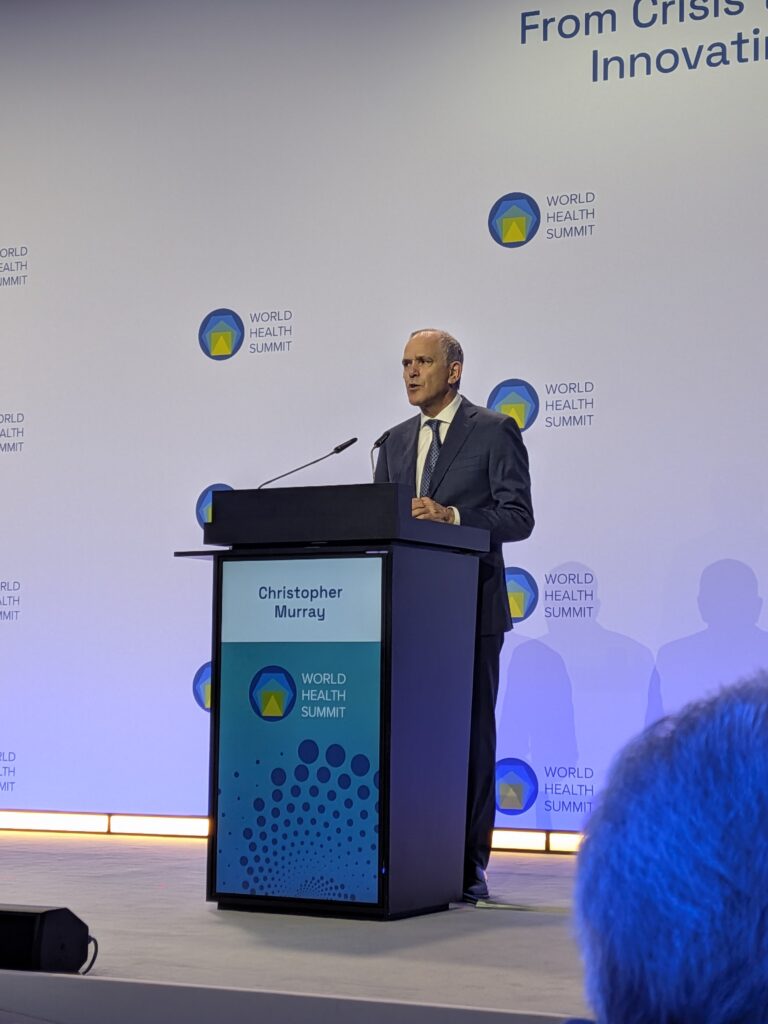
The Lancet Commission’s findings looks beyond preparing for the next outbreak to considering a wider range of threats that could affect how long and how well people live over the coming decades.
While presenting the findings, Christopher Murray, Director of the Institute for Health Metrics and Evaluation at the University of Washington, explained that the Commission began with three major concerns: conflict, climate change and the effects of the COVID-19 pandemic. Researchers wanted to know if common strategies could address these different threats, and whether other risks deserved a place on the global health agenda.
The Commission assessed these threats over a 75-year period, from 2025 to 2100, using disability-adjusted life years (DALYs) to measure their impact on health. One DALY represents one year of healthy life lost through illness, disability or premature death. Of the 17 threats identified, two were found to carry a non-zero risk of human extinction this century: nuclear conflict and the malicious use of artificial intelligence. The other 15 were classified as major catastrophic risks, each with the potential to account for more than one billion DALYs by 2100.
The other 15 threats are air pollution, antimicrobial resistance, child malnutrition, conflict, pandemics, poor mental health, smoking, high blood pressure, unhealthy ageing, high alcohol use, climate change, income inequality, low educational attainment, obesity and the collapse of development assistance for health.
The report also points to how unevenly these threats could affect people around the world. Sub-Saharan Africa, which accounts for about 15.3 per cent of the global population today, is projected to be home to more than a third of the world’s population by 2100. The Commission estimates that sub-Saharan Africa could account for 70 per cent of the amenable health burden associated with a collapse in development assistance for health between 2025 and 2100.
These projections raise questions about how governments can prepare for future health threats, especially in regions where health systems already face significant resource constraints. The Commission emphasised that responding to these risks will require action beyond the health sector, involving areas such as finance, climate, security and development. It sets out three recommendations: building health systems that are ready for emerging threats, investing in innovation, and establishing a recurring Lancet Monitor of 21st Century Global Threats to Health to update assessments of global health threats, track changes in the evidence and measure progress over time.
For Ibrahim Abubakar, Vice Provost for Health at University College London, the Monitor’s value should be judged by whether it leads to measurable improvements in the places facing the greatest health burden.
He outlined three priorities for making the Monitor useful. First, data must be disaggregated to show differences between countries and communities. Over time, assessments should also account for the health consequences of migration, conflict, displacement and rising sea levels. Second, countries need to take ownership of the data and be involved in using it to shape decisions. Third, the Monitor should track what political leaders actually do in response to the findings.
For countries facing constrained health budgets and competing development priorities, this kind of monitoring could help connect long-term projections to decisions being made today.
Subscribe to Africa Health Watch
Get the latest health policy analysis and investigative journalism delivered straight to your inbox.
We respect your privacy. Unsubscribe at any time.