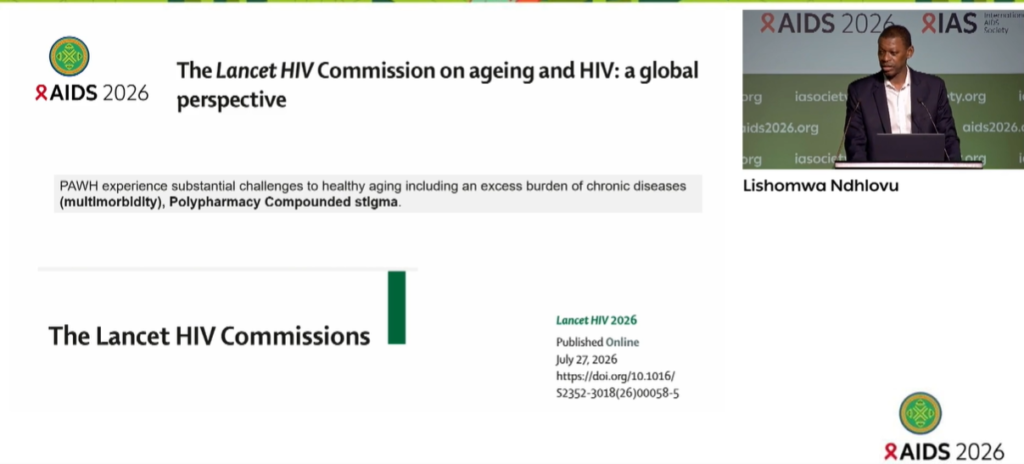

Political choices remain one of the hard problems in HIV response. The second plenary at the 26th International AIDS Conference, themed “The Future of HIV Prevention,” made this clear.
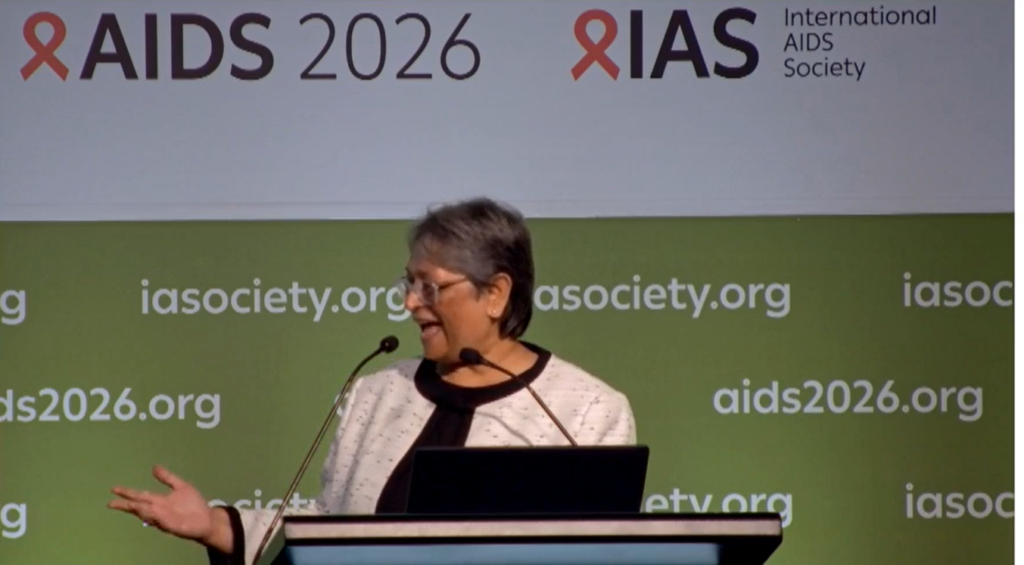
Quarraisha Abdool Karim, Co-founder of CAPRISA and the Chair of the session, opened with a call for an all-of-society approach to HIV prevention, bringing together scientists, community members, industry, and government officials. With more than 1.2 million people acquiring HIV in 2025, she said the need for effective prevention remains urgent.
“If preventive measures are not put in place, the goal of ending AIDS by 2030 cannot be reached,” she said.
Dr. Raphael Landovitz, Chief of the Division of Infectious Diseases, David Geffen School of Medicine at UCLA, opened with a blunt assertion: “PrEP Works.“
Arguing that the science of PrEP is one of the genuine triumphs of modern medicine, he brought attention to the hard problems that remain, saying they are no longer scientific but political.
“The abrupt dismantling of USAID and deep cuts to PEPFAR already stopped the advancement”, he pointed out. He cited an unprecedented wave of National Institutes of Health (NIH) grant terminations. This laid bare what it cost to build those gains, what has already been dismantled, and what stands to be lost if the funding cuts continue.
This comes at a pivotal moment for African countries, as global health funding programs fold. Locally led developments can no longer remain a talking point.
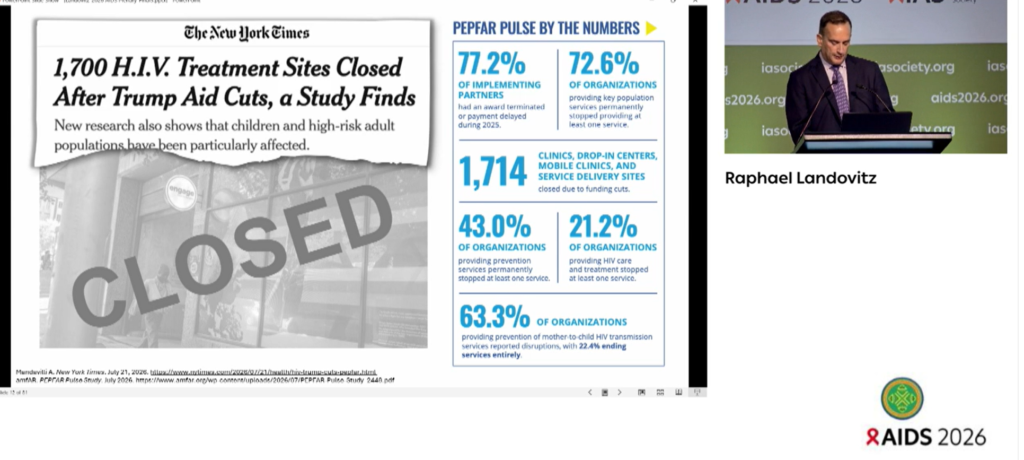
Landovitz also traced some of the major milestones in HIV prevention, from fully suppressive antiretroviral therapy to the HPTN 052 study and the approval of TDF/FTC for HIV prevention. He further discussed the challenges of developing long-acting HIV prevention tools and the importance of adherence, noting that post-exposure prophylaxis remains effective after exposure. “The efficacy depends on how quickly you dose after exposure,” he said.
Dr. Sandhya Vasan, Senior Vice President, Global Infectious Diseases at the Henry M. Jackson Foundation (HJF), highlighted the recent advances in HIV vaccine science and what lies on the road ahead. She spotlighted the scientific challenges and what has been done through innovations to overcome them.
“We need multiple tools to reduce the number of infected individuals, and vaccine is one of them,” she stressed, arguing that an effective and durable vaccine could work alongside PrEP and reach more people.
The speakers centered on the effectiveness of PrEP, how broadly neutralising antibodies can contribute to advancing our understanding and the cure and vaccine agenda, and AMP trials that provide a guidepost for HIV vaccine development.
“We have seen multiple strategies to engage communities, to educate, to get them interested, to understand that vaccines are safe. Vaccines save lives.”
~ Sandhya Vasan
“PrEP will only be effective in those people who perceive that they need it,” she said, emphasising that there is an urgent need for community engagement and trust-building to ensure the acceptance and use of HIV vaccines — and highlighting the role of community advocates and stakeholders in promoting that acceptance.
The plenary’s message was clear: without trust and political will, no amount of community engagement or innovation will get the world to its 2030 HIV prevention goals.
Subscribe to Africa Health Watch
Get the latest health policy analysis and investigative journalism delivered straight to your inbox.
We respect your privacy. Unsubscribe at any time.